In this article
When a sewer line fails, the first real decision isn't who does the work. It's whether you're fixing one section or replacing the whole run. The gap between those two options is significant in both cost and disruption, and the honest answer depends entirely on what the pipe actually looks like inside. A spot repair makes sense when one section has failed on a line that's otherwise sound. Replacement makes sense when the pipe has reached the end of its service life and is failing in several places at once. The problem is that both situations produce the same symptom, a backed up line, so you can't tell from the house which one you have. That's why camera footage isn't optional here. Any contractor quoting a dig without showing you the inside of the pipe is guessing, and you're the one paying for that guess. Footage first, then a number.
When a Spot Repair Is the Right Call
Most sewer problems live in one place. A single collapsed section, a joint that has separated, a length crushed by a root or by settling ground. If the camera travels the rest of the run and shows pipe in reasonable condition, opening the ground over that one section and replacing it is the sensible answer. The rest of the line stays undisturbed, the excavation is contained, and the restoration cost stays manageable. This is by far the more common scenario on lines installed after about 1960. A spot repair on sound pipe can last decades, and there's no reason to replace material that hasn't failed.
When Replacement Costs Less Over Time
The calculation changes when footage shows failure at several points. Clay pipe from the 1920s through the 1950s tends to go progressively rather than all at once. Joints open along the run, roots enter at multiple places, and sections settle independently. Patching one of those points on a line that's failing everywhere buys you a year, maybe two, and then you're excavating again a few feet away. When a camera shows three or four compromised areas along the same run, replacing the whole thing usually costs less than the series of repairs you'd otherwise do, and it comes with new pipe that isn't going to fail again in your lifetime.
What Actually Drives the Cost
People assume the pipe and the labor are the expensive parts. Often they aren't. What sits on top of the line usually drives the total more than the pipe work does. A run under an open lawn is the cheapest scenario there is. A run under a driveway means cutting, removing and repaving. A run under mature landscaping, a stone walkway or an irrigation system means restoring all of it. Depth matters too. A line three feet down is a different job than one at eight feet, and in low lying areas near water, groundwater changes the approach entirely. Any honest estimate accounts for restoration, not just excavation.
Why the Locate Comes Before the Shovel
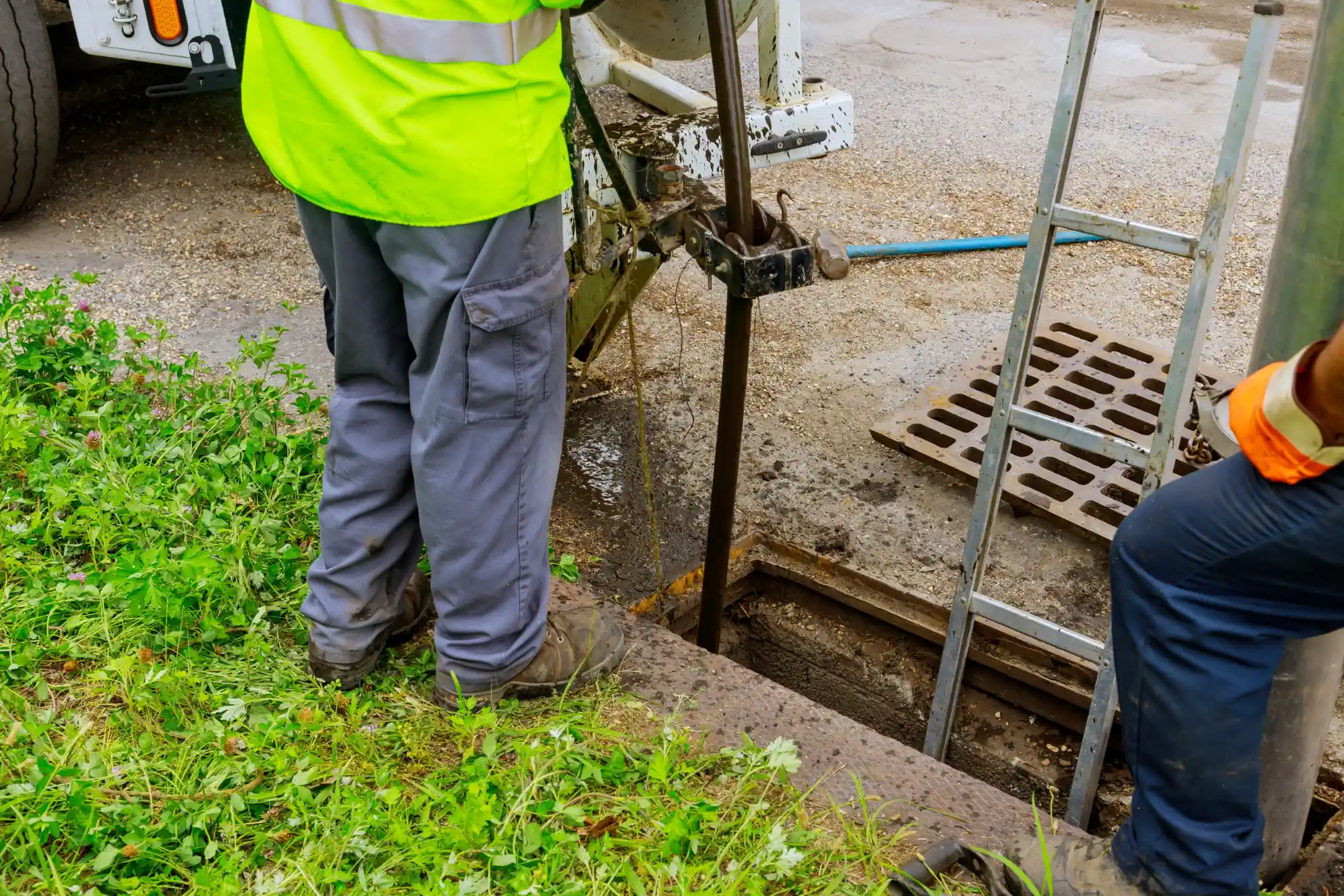
Once you know what needs doing, the next step is knowing exactly where. Marking the depth and path of the line before excavating is what keeps the dig to one targeted opening instead of a trench following the pipe until the damage turns up. On a property with expensive ground cover, that difference is frequently larger than the repair itself. It also prevents the other common problem, which is opening the wrong section entirely and having to close it and try again. A locate takes about an hour, and on a job this size it's reliably the cheapest hour in the entire project.